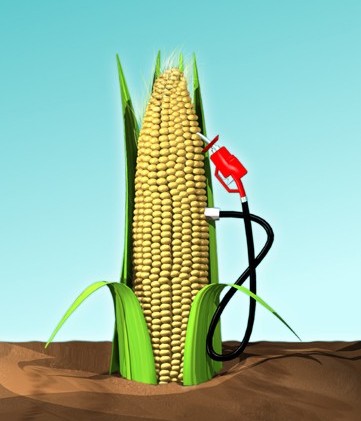
David Pimentel, a well respected professor of ecology and agricultural sciences at Cornell, is another well known skeptic of Ethanol. As you have read in my previous interview he has written persuading papers alongside Tad Patzek questioning the viability of ethanol as a fuel. I apologize for the repeated questions.

More about David Pimentel
The Interview:
Konrad Imielinski: Knowing your skepticism on ethanol, which alternative fuel then has the biggest chance to replace oil?
David Pimentel: For the replacement of oil, we need CONSERVATION and then do as the South Africans, produce gasoline from our abundant coal –less than one-tenth the environmental pollution compared with corn ethanol.
KI: Major oil companies can easily enter the ethanol industry as it is technically simple to produce. Why haven’t they yet? What affect will it have on smaller companies such as Pacific Ethanol (PEIX) or Xethanol (XNL)? Will those smaller companies be squashed or acquired?
DP: Several oil companies are producing biofuels – BP and others.
KI: Based on your research, if true, that ethanol from corn takes more energy to produce than it delivers, why are major figures such as Vinod Khosla, Richard Branson, Robert Redford and President Bush still strong advocates for ethanol?
DP: Ethanol from corn and cellulose is an energy loser. Why do Dr. Patzek and I show loss of energy in ethanol production? Because we do not omit energy inputs like the pro-ethanol lobby does. Compare our data with that of the pro-ethanol lobby.
KI: Why can’t America follow the path which Brazil has taken in terms of alternative fuels?
DP: Brazil, during the last 10 years, increased oil consumption 42% compared with a relatively small increase in ethanol use. Check it out. Also, ethanol production in Brazil is heavily subsidized like it is in the U.S. Why?
KI: What is your view on cellulosic ethanol?
DP: Cellulosic ethanol production requires more energy than corn ethanol. See our 2005 paper.
KI: What is the future of ethanol stocks as they have been losing steam since their bubble like run?
DP: Dr. Patzek and I are convinced that when all the facts are scientifically and accurately investigated, that ethanol production will be abandoned!
Comments?